“And now faith, hope, and love abide, these three; and the greatest of these is love.”-1 Corinthians 13:13
We introduced this Lenten Meditation series naming some of the anxiety that is floating in our world, and what the Church has to offer—agape love that comes not from within the world but beyond it, a love so profound that it gives itself for the good of the world.
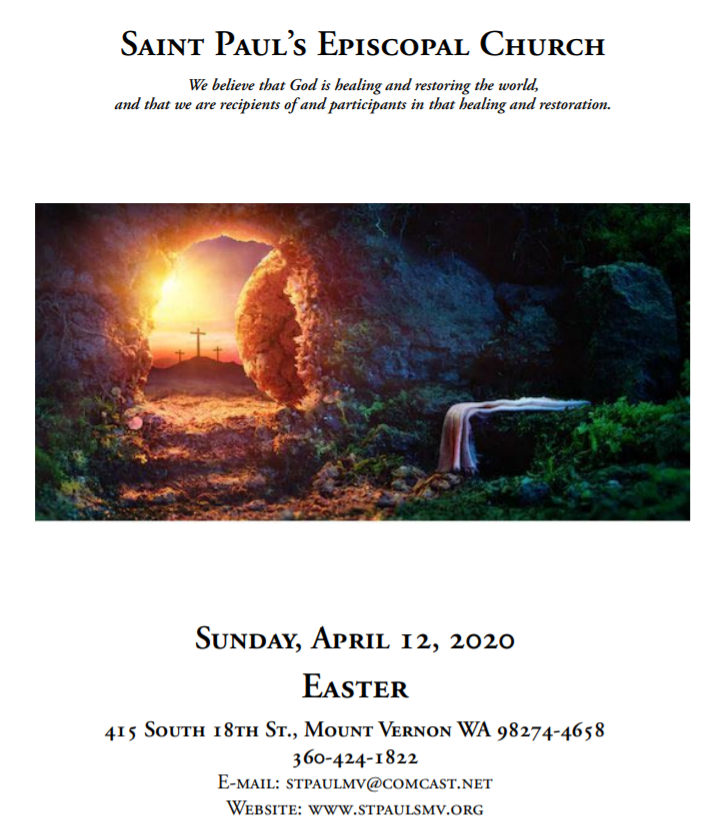
We have just relived the story about that love, how Jesus suffered, was crucified and died for us, that we might live. Today, on Easter Sunday, we celebrate the power of that love to overcome all the anxiety in the world and come out on top. But it’s more than just winning a boxing match with evil. The resurrection is the great vindication of love, proof that love does have the final word, no matter what the world around us might be telling us. The hope of the Christian is precisely this. We know that God is healing and restoring the world, even bit by bit, in spite of all the setbacks and losses, and that we, you and I, have tasted of that healing and restoration and are now sharing in the work.
That work is internal. St. Paul said, “Be anxious for nothing, but in everything, by prayer and petition, make your requests known to God, and the peace of God that passes all understanding will keep your hearts and minds in Christ Jesus. (Phil. 4:7.) The risen Christ offers us peace that passes all understanding, peace rooted in his resurrection, something that lets us stand apart from the anxious situations in the world that would otherwise drag us down into despair.
That work is external. When Jesus cleanses the temple (Matt 21, Mark 11 and John 2,) he was not just incensed at the irreverence of the situation. The temple authorities charged the temple tax in Jewish coin, and pilgrims from around the Roman Empire had to change their foreign currencies into the acceptable currency. Money changers regularly gouged exchange rates unfairly. He was fighting to heal and restore the temple as a house of prayer for all nations so that God’s peaceful kingdom might reign on the earth. The resurrection gives us a place to stand in the midst of the anxious injustices of the world, pointing the way to God’s peaceful kingdom.
God of all peace, we live in an anxious and divided world: Grant us to so live the power of your Son’s resurrection, that we might bring your peaceful kingdom to bear on the healing and transformation of the world, through whom, with you and the Holy Spirit you live and reign in peace and glory, we pray. Amen.
-Fr. Paul Moore